

U.S. Waives Human Rights Conditions on $320 Million in Military Aid to Egypt
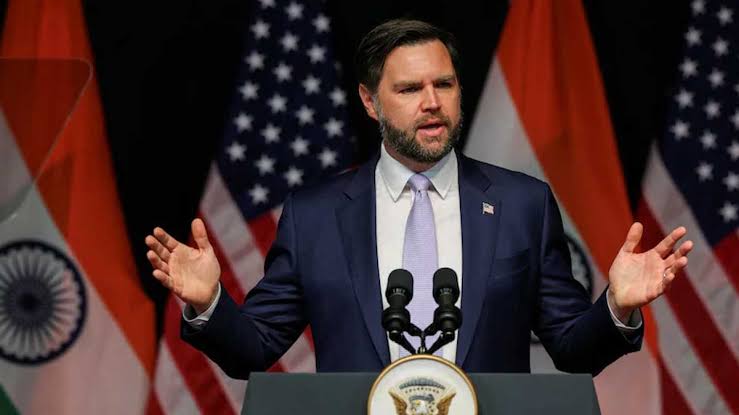
Vance: A Deal with Iran Is Possible, but Tehran’s Actions Will Be Decisive
U.S. Vice President JD Vance has said that an agreement with Iran remains possible, while emphasizing that Tehran’s conduct will play a decisive role in determining whether negotiations can produce a lasting arrangement.
Vance has previously said that Washington is prepared to provide economic benefits under an agreement if Iran fulfills its commitments. He has stressed that the U.S. administration intends to judge Tehran primarily by its actions rather than its assurances. (CBS News)
The comments come amid renewed diplomatic efforts between Washington and Tehran. Iranian officials have continued to signal openness to negotiations, while disagreements remain over sanctions, Iran’s nuclear activities and the future of the Strait of Hormuz. Recent indirect talks have involved regional mediators as both sides explore possible arrangements to reduce tensions. (Reuters)
Vance previously indicated that a longer-term agreement addressing Iran’s nuclear program could potentially be reached within months, although he acknowledged that significant differences remained to be resolved. (CBS News)
The latest diplomatic efforts therefore remain dependent on whether Washington and Tehran can bridge their differences over the terms, sequencing and implementation of any potential agreement.
In keeping with the ancient and enduring Persian tradition of defense over aggression, Pars Records declare that any form of threats or inflammatory rhetoric issued by certain individuals within Persia cultural geography—regardless of one's views on the policies or actions, whether positive or negative, of other countries—will not contribute to peace, stability, or constructive dialogue.
On the contrary, such statements may prove harmful and, in the worst cases, lead to serious and unintended consequences. They can also provide material for extremists and sensationalist media, further escalating tensions and undermining efforts toward mutual understanding and regional stability.
Pars Records therefore reaffirms our commitment to responsible discourse, restraint, and the pursuit of peaceful engagement in accordance with our longstanding cultural values.


We believe that the central issue is the national and civilizational survival of Iran: the preservation of its territorial integrity, independence in decision-making, capacity for development, and historical continuity.
On this basis, an essential question must be addressed: Is the continuation of the foreign-policy objectives and slogans that have developed within the Islamic Republic over the past 48 years still compatible with the requirements of Iran’s national survival?
If the answer remains affirmative, the path ahead will be difficult and may ultimately lead to a dead end. Such a course, rather than ensuring the preservation of the Islamic Republic, may result in the weakening of state institutions, economic erosion, international isolation, and a decline in national power, potentially creating conditions for a civilizational rupture. In literary terms, this would amount to a path toward nowhere.
We therefore believe that the framework of the discussion must change.
The Strait of Hormuz, the nuclear issue, sanctions, Israel, and the United States are matters of negotiation and political settlement. None of these issues should be elevated into an end in itself.
1. Iran’s national survival must take precedence over ideology
Any policy that weakens Iran’s national survival, territorial integrity, or prospects for development requires reconsideration.
The preservation and strengthening of Iran must constitute the fundamental consideration in the formulation of national and foreign policy.
2. Relations with the United States should no longer be treated as a taboo
The restoration of official relations between Tehran and Washington does not necessarily mean surrender or friendship. It means returning an important option to Iran’s foreign-policy toolbox.
Direct and official relations can provide a framework for reducing pressure, addressing misunderstandings, gradually resolving disputes, and moving away from a permanent cycle of hostility.
It is possible to oppose the policies of Israel, defend the rights of the Palestinian people, and safeguard Iran’s national security without making the destruction of another state an official objective.
Turning hostility toward Israel into an existential objective has imposed significant costs on Iran’s national interests.
3. Foreign policy should move from an enemy-centered approach to an interest-centered approach
Iran’s relations with the United States, Europe, Russia, China, India, and the Arab countries should be determined by clearly defined Iranian national interests rather than ideological concepts of permanent friendship or permanent hostility.
Iran’s foreign relations should be assessed according to their consequences for the country’s security, sovereignty, economic development, national power, and long-term interests.
4. Negotiations should extend beyond individual cases
Negotiations concerning the Strait of Hormuz, the nuclear issue, and sanctions are necessary. However, the broader objective should be the establishment of more stable and sustainable arrangements for Iran’s relations with the United States and the international community.
Iran does not necessarily need to achieve victory in every individual dispute in order to endure. It needs to reduce hostility, expand its strategic options, and rebuild national power.
Our Position
The central question today should not be how the Islamic Republic can prevail in every arena. The fundamental question is how Iran can safely pass through this historical period and remain Iran.
If changes in foreign policy are necessary, we believe they should be initiated by the country’s decision-makers before changing circumstances and external pressures impose those changes.
History does not always provide nations with a second opportunity to correct their course.
For this reason, the preservation of Iran’s territorial integrity, national independence, development capacity, and historical and civilizational continuity must remain the fundamental consideration in determining the country’s future direction.
Iran must remain. Iran must retain its territorial integrity and independence. And Iran must preserve its capacity for development and historical continuity.